Savage Software /dev
Explore the work of Jordi Murgó, also known as "Savage" – an early Catalan hacker, developer of security tools, and a digital activist who has contributed to the field since the 80s.
This portal provides an overview of his work in code and system exploration, and highlights his contributions to the evolution of the internet in Spain.
whoami
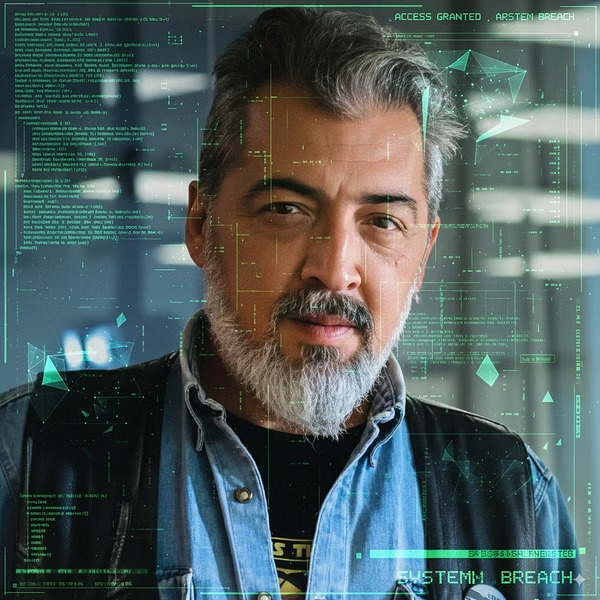
Jordi Murgó, known as "Savage", is a prominent figure in Spanish hacking. Born in Lleida in 1968, he became an early leader, guiding the group Apòstols during the late 80s. Under his leadership, the group not only developed numerous open-source security tools but also played a role in early international ethical hacktivism campaigns.
From his early years as "The Phreaker" to his contributions to Linux and other open-source projects, Jordi has consistently demonstrated key aspects of hacker philosophy: curiosity driving exploration, effective problem-solving, and a commitment to the free dissemination of knowledge.
Today, Jordi continues to innovate in the digital space. As a Security and Artificial Intelligence Specialist at GFT, he combines his decades of experience with new advancements in emerging technologies, remaining active in the cybersecurity field.
cat early_years.log
The Early Years: MSX and the 300 Baud Era
In this "golden age" of hacking, Savage and his companions met in digital rooms, notably QSD on the French Minitel network. Originally an LGBTQ+ chat platform, it became a common meeting point for European hackers, where the ironic opening query "Are you a hacker or gay?" became a shared code among those exploring technology.
ls -la /tools
From Digital Frontier to Tool Development

As the internet emerged in the 90s, a new digital frontier beckoned. Savage honed his talent, dedicating himself to developing security tools, all rooted firmly in the ethos of free and open-source software.

Sneak32: Hardware Hacking in the IoT Era
More than a mere gadget, Sneak32 provides an example in cybersecurity and counter-surveillance. It serves as a practical tool for identifying potential electronic threats in sensitive environments.
Presented at RootedCON 2025, where it was discussed in the context of identifying infiltrators within sensitive or protected zones. As smart devices proliferate throughout our environments, tools like Sneak32 help activists and everyday users protect their spaces.
grep -r "contributions" /spain
Early Contributions to the Hispanic Internet
cat hacktivism.md
Code in Service of Causes
"We are hackers out of necessity; computing was expensive and you had to find a way to get tools, information, access networks... to create the programs that would prevent you from paying."
Shunning destructive paths, Savage used his technical skills for social advocacy and ethical activism. In 1997, he joined forces with the Portuguese collective ToXyN in an early hacktivism campaign, participating in protests against Indonesia's occupation of East Timor.
Engineered Solutions
Savage directly contributed by developing custom exploits and specialized tools like WhatOS (a precursor to QueSO). These instruments were designed to identify vulnerabilities within Indonesian government systems, alongside tailor-made exploits for the campaign, including those targeting imapd and ncsa httpd.
Strategic Coordination
Beyond coding, he organized synchronized Denial-of-Service attacks aimed at key Indonesian government websites. His commitment translated into "code and sleepless hours," a significant contribution to the cause, contributing to impact through coordinated digital action.
Global Impact
The collective's efforts led to the disruption of most official Indonesian government websites, notably including the military's. This cyber-protest generated international attention, bringing the East Timor conflict into the global spotlight.
cat professional_journey.log
echo $PHILOSOPHY
Hacker Ethics & Reflections
🔍 Curiosity
My journey has always been guided by curiosity rather than malice. For me, hacking was never about breaking, but about understanding — exploring how things work and imagining how they could work better.
🌐 Community
In the early days, this meant experimenting with networks, building tools like QueSO and NePED, and connecting with hacker communities across Spain and Europe. What mattered was not the exploit itself, but the knowledge gained and shared.
⚡ Responsibility
Today, the same spirit drives my work in cybersecurity and artificial intelligence. Technology is advancing faster than our ability to govern it, and I believe hackers have a responsibility: to question, to expose risks, and to help society use technology ethically and safely.
cat talks.log
Talks, Conferences & Media
Public presentations, interviews, and media appearances covering cybersecurity, AI ethics, and hacker culture.
Historical Appearances (no recording available):
RootedCON 2010 — "Apòstols"
panel with Ramón Martínez (rampa), revisiting the early hacking landscape.
RootedCON 2019 — "Historical
Hackers" panel alongside prominent figures from Spanish cybersecurity
history.
RootedCON 2023-2025 — Multiple presentations including "Do LLMs Believe in God?" and the
official unveiling of the Sneak32 project.